Lombok Island has earned its place as one of Indonesia’s most sought-after destinations for travelers who want a mix of natural beauty, cultural depth, and outdoor adventure. Unlike Bali, its busier neighbor to the west, Lombok feels slower and more rugged.
Accommodation ranges from backpacker hostels in Kuta and Senggigi to private luxury villas overlooking the coastline, all easy to find through local directories and travel guides. Getting here is straightforward too—daily flights link Lombok International Airport to Bali, Jakarta, Surabaya, and other major Indonesian cities, making it accessible whether you’re planning a short stop or a longer island-hopping trip.
The Mount Rinjani Trekking Experience
For anyone chasing a serious trekking challenge, mount Rinjani trekking is the main reason to visit Lombok. At 3,726 meters, this active volcano is the second-highest peak in Indonesia and offers terrain that tests both endurance and mental grit. The trail cuts through dense rainforest, open savanna, and volcanic scree, with steep sections that push even experienced hikers.
You don’t need to be an expert to attempt it, but you do need the right support. Licensed guides who know the mountain’s weather patterns and terrain accompany every trek, handling navigation, safety, and camp setup. Climbing Mount Rinjani is achievable for fit beginners with proper preparation, while seasoned hikers will appreciate the technical sections near the summit.
Lombok gained international recognition after early travel guides featured Rinjani’s dramatic landscapes, and the island’s name itself comes from “lombok,” the Indonesian word for chili pepper—a nod to its once-spicy reputation among traders. Geographically, the island sits 8° south of the equator and stretches roughly 80 km from east to west and north to south, giving it a compact but diverse landscape perfect for Lombok trekking.
Exploring Mount Rinjani National Park
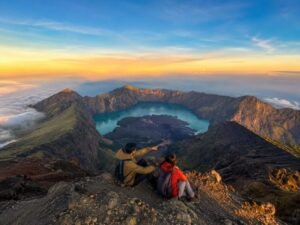
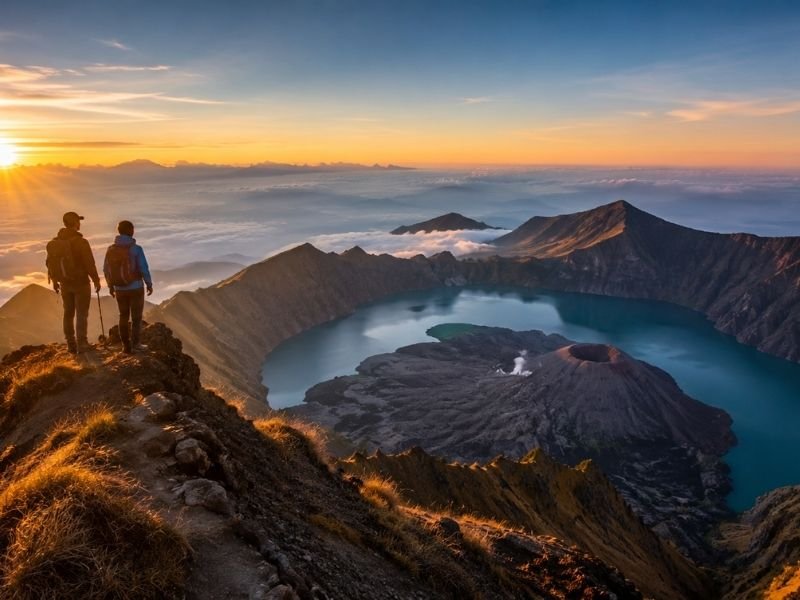
Mount Rinjani is the third-highest volcano in Indonesia, and its scale becomes obvious once you’re inside the national park. The massive caldera shelters Segara Anak, a crater lake sitting 600 meters below the rim. In the center of the lake, a new volcanic cone called Gunung Baru jari has risen from past eruptions, the most recent major one occurring in 1994. You can still see fresh lava flows and active sulfur vents around the inner crater, a reminder that the mountain is alive.
The park protects not only the volcano but also the surrounding lowland and montane rainforest, making it a critical part of the Wallacea transition zone. This is where Asian and Australasian ecosystems overlap, creating unique biodiversity. Wildlife is abundant but often hidden under the dense canopy. If you start trekking early, you might spot the rare ebony leaf monkey, known locally as Lutung. Long-tailed macaques are more common, along with rusa deer, barking deer, and wild boar that roam the lower trails.
Beyond Rinjani: Rainforest, Waterfalls, and Highland Villages
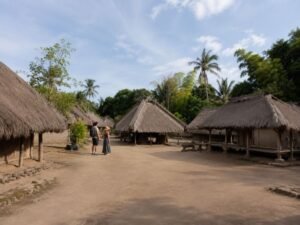
Rinjani gets the spotlight, but Lombok’s adventure scene goes far beyond the volcano. The highland village of Tetebatu, perched on the southern slopes of Rinjani, is a hub for rainforest hikes, rice terrace walks, and visits to traditional Sasak villages. The air here is cooler, and the pace of life slower, making it a good place to acclimatize before you trek to Mount Rinjani.
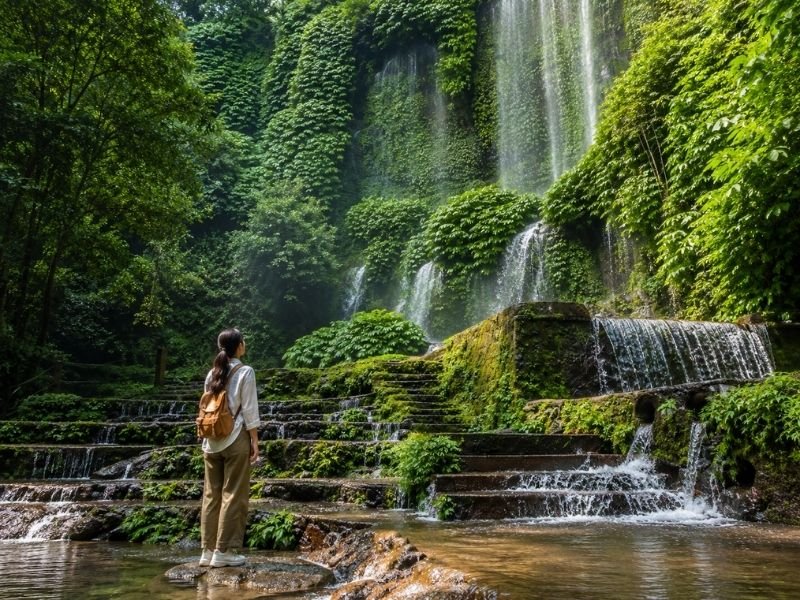
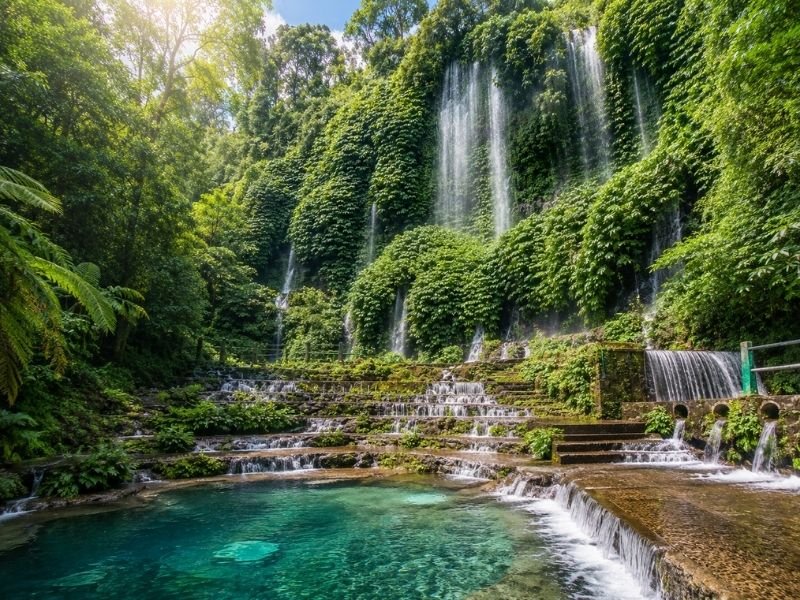
In Central Lombok, Benang Stokel and Benang Kelambu waterfalls are popular day trips. Both sit inside lush forest, with Benang Kelambu’s water cascading through tangled roots like a natural curtain. These spots also serve as alternative starting points for shorter rinjani trekking routes.
Up north, Pusuk Pass Monkey Forest offers an easy nature walk through protected forest. The area is known for its troops of long-tailed macaques and panoramic views over North Lombok’s coastline. It’s a low-effort hike that works well for families or travelers with limited time who still want a taste of Lombok trekking.
Choosing Your Rinjani Trekking Route.
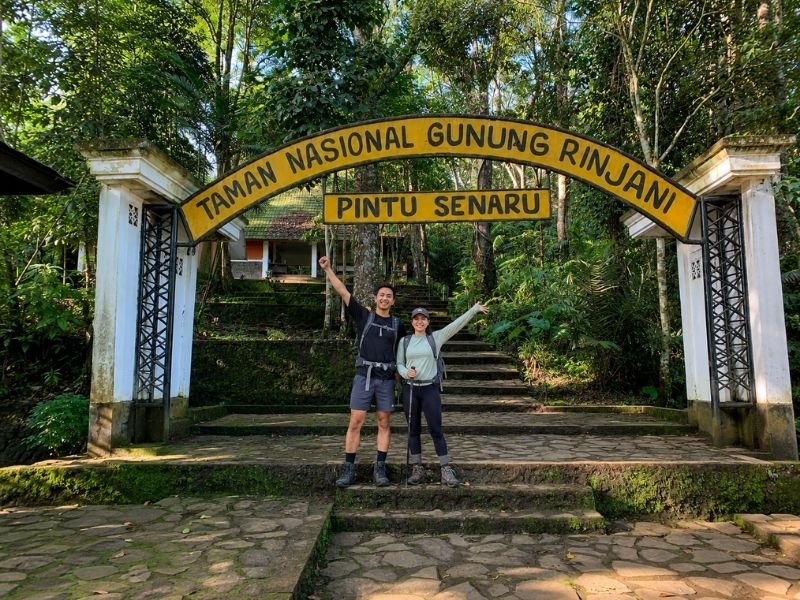
More than 20 villages encircle Mount Rinjani, but two main trails are used for trekking: Senaru and Sembalun.
Senaru Route. This trail is favored by trekkers who want to focus on Segara Anak Lake and the crater formed by a massive eruption centuries ago. The ascent is less steep than Sembalun, making it more manageable for first-timers. The route passes through dense rainforest where you’re likely to hear gibbons and spot exotic birds before reaching the lake and hot springs.
Sembalun Route. If your goal is the summit, Sembalun is the preferred starting point for climbing Mount Rinjani. The trail crosses open savanna grasslands with wide views of Lombok’s eastern coastline. It’s steeper and more exposed, but the direct path to the 3,726-meter peak makes it the standard route for summit attempts. The landscape here feels alpine, especially at sunrise when frost sometimes forms on the grass.
Both routes showcase Lombok’s biodiversity. Along the way, you’ll see edelweiss flowers growing wild above 2,000 meters, and with luck, spot palm civets or porcupines at night. Most itineraries run 2D1N or 3D2N, combining lake visits, hot spring dips, and optional summit climbs.
Practical Tips for Trekking Mount Rinjani
Book with a licensed operator like Pasatama Travel Service for safety. As a registered tour operator, they provide tents, food, porters, and guides who know emergency procedures for mount Rinjani trekking.
Arrive a day early. Give yourself time to rest after your flight and adjust to Lombok’s climate. Rushing straight into a trek increases the risk of altitude sickness and fatigue.
Pack smart, not heavy. Two t-shirts, two pairs of shorts, a warm layer for the summit, good trekking shoes, and a headlamp cover most needs. Porters carry the bulk of your gear, so keep your daypack light.
Pick the right season. April to October is the dry season and the safest time for rinjani trekking. Trails are drier, views are clearer, and the risk of landslides is low. Treks run outside these months, but expect rain, mud, and leeches, especially in the rainforest sections.
Why Lombok Stands Out
Lombok offers a rawer, less commercialized version of island adventure compared to Bali. You can summit an active volcano one day, surf empty breaks in Kuta the next, and spend an afternoon in a Sasak village learning traditional weaving. The island’s infrastructure has improved, but it still retains a sense of space and authenticity that’s getting harder to find in Indonesia.
Whether you come for the challenge of trek to Mount Rinjani, the quiet waterfalls of Central Lombok, or the cultural depth of its highland villages, Lombok rewards travelers who take the time to explore beyond the beach. For the full experience, combine coastal relaxation with at least one Lombok trekking route and leave with stories you won’t find anywhere else.