Lombok’s tourism industry has grown rapidly over the last two decades, with both domestic and international visitors increasing steadily each year. Travelers come for the island’s dramatic landscapes, pristine beaches, and the warm hospitality of the Sasak people.
Unlike its neighbor Bali, Lombok retains a quieter, more authentic feel while offering the same level of natural beauty and cultural depth. Whether you’re planning a Lombok tour, a Lombok trip, or a longer journey in Lombok, the island delivers experiences that feel both adventurous and personal.
Strategic Location in Indonesia’s Golden Triangle
Lombok sits at the center of Indonesia’s “Golden Triangle” of tourism. To the west is Bali, famous for its temples, arts, and reputation as the “Island of the Gods.” To the east are Komodo and Flores, home to Komodo dragons and the tri-colored crater lakes of Kelimutu.
To the north lies Sulawesi, known for the unique cultural traditions of Tana Toraja. This location makes Lombok an ideal stopover or a standalone destination for travelers exploring eastern Indonesia. Many visitors use a tour to Lombok as the starting point for a wider Lombok round trip that includes the Gili Islands and Mount Rinjani.
Unspoiled Nature and Diverse Landscapes
Lombok offers a striking mix of mountains, forests, coastlines, and islands that appeal to every type of traveler. The island’s climate is tropical, with average temperatures between 21°C and 31°C. There are two main seasons: the dry season from May to October and the wet season from November to April. The dry season is the best time for sightseeing, trekking, and island hopping.
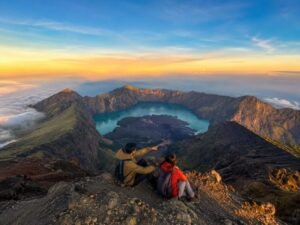
The landscape changes dramatically across the island. In the northeast rises Mount Rinjani, an active volcano at 3,726 meters and the second-highest peak in Indonesia. The mountain and its surrounding forest are protected as Mount Rinjani National Park, part of the Wallacea transition zone where Asian and Australian flora and fauna meet.
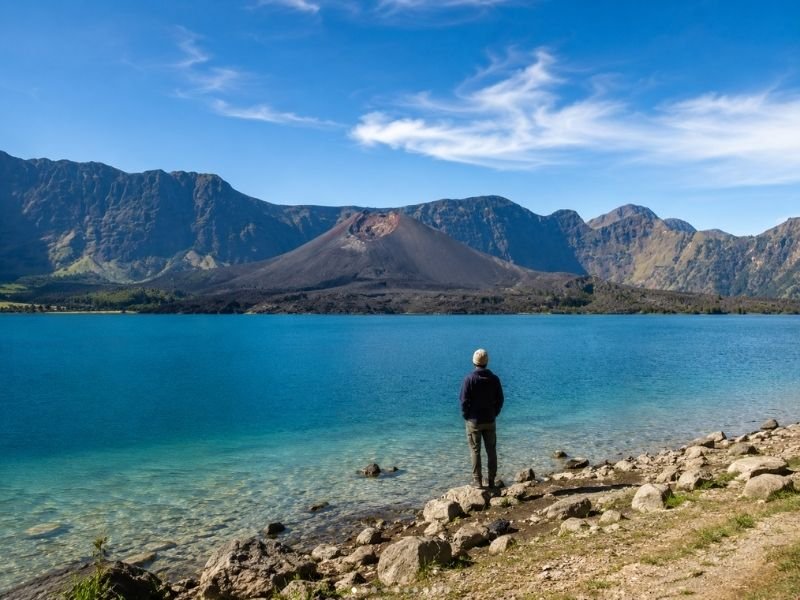
Trekkers can choose 2D1N or 3D2N routes to the crater rim, Segara Anak Lake, and the summit, passing through savanna, rainforest, and volcanic terrain. Wildlife such as long-tailed macaques, ebony leaf monkeys, rusa deer, and wild boar can often be spotted along the trails.
The southern and southwestern coasts are known for their beaches. Kuta and Tanjung Aan offer stretches of white sand and turquoise water perfect for swimming and sunbathing. Nearby beaches like Seger, Gerupuk, Ekas, and Banko-Banko provide consistent waves for surfing and windsurfing.
The south is drier and more arid, while most of the island’s farmland and population are concentrated in a 25-km-wide coastal strip. If you want to explore Lombok island properly, set aside time for both the highlands and the coast.
The Gili Islands and Marine Activities
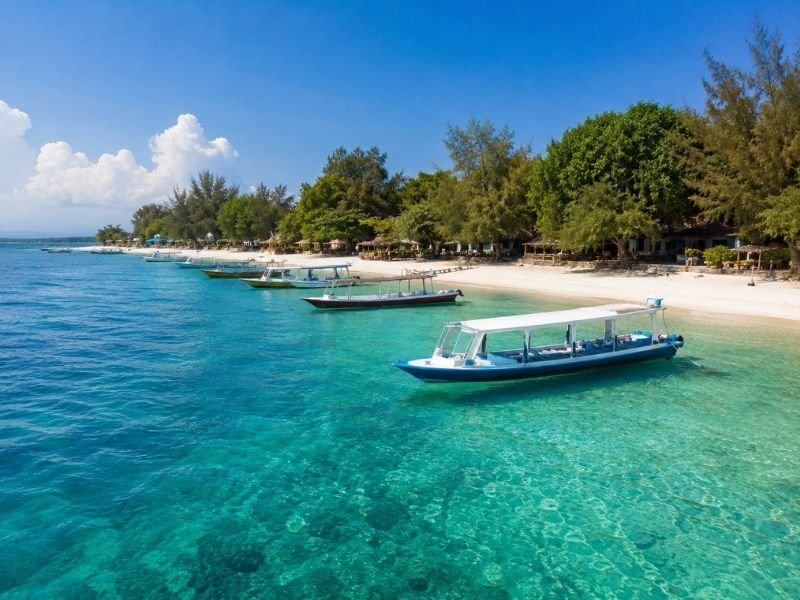
Along Lombok’s coastline are dozens of small islands called Gili. The most popular are Gili Air, Gili Meno, and Gili Trawangan in the northwest, famous for snorkeling, diving, and sunset views. In the southwest, Gili Nanggu, Gili Gede, and Gili Sulat offer quieter beaches with clear water and healthy coral reefs.
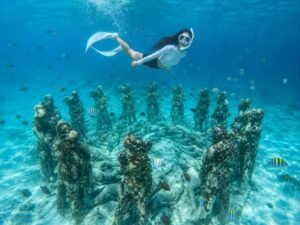
Marine activities here include snorkeling, scuba diving, parasailing, kayaking, and paddleboarding. The underwater visibility is excellent year-round, making Lombok a top destination for divers and snorkelers. A snorkeling trip to explore 3 Gilis is one of the most popular day trips from Lombok.
You can swim with turtles in Gili Trawangan, relax on the quiet shores of Gili Meno, and enjoy the cafes of Gili Air all in one day. For divers, the area is known as a world-class Lombok dive site, with diving in Gili Trawangan offering chances to see reef sharks, manta rays, and vibrant coral gardens. Many travelers choose snorkeling in Gili as their first introduction to Lombok’s marine life.
Culture and Traditions of the Sasak People
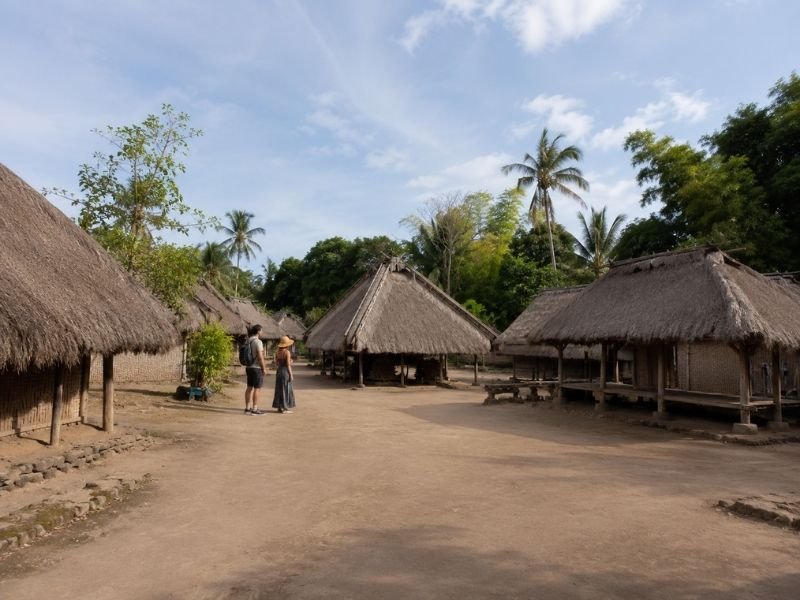
Lombok’s native Sasak community maintains a strong cultural identity. Visitors can explore traditional villages, observe weaving and pottery making, and visit historic mosques and palaces. If you travel after the harvest season, you may witness Sorong Serah, a traditional Sasak wedding ceremony.
The name means “to push and to surrender” and represents the groom’s apology to the bride’s family for eloping. This ritual reflects the island’s blend of adat customs and Islamic traditions. A trip to Lombok isn’t complete without spending time in these villages to understand the local way of life.
Facilities, Accommodation, and Travel Services
To support tourism growth, Lombok has developed a wide range of facilities. Accommodation options span budget hostels, boutique hotels, international chain resorts, and private luxury villas. Dining ranges from local warung serving ayam taliwang, plecing kangkung, and sate rembiga to international restaurants in Kuta, Senggigi, and the Gili Islands.
Lombok International Airport connects the island to Jakarta, Bali, Kuala Lumpur, and Singapore. Pasatama Travel Service DMC, the government-licensed tour operators provide tailor-made and packaged tours, with professional guides available in English, German, French, Dutch, Italian, Spanish, Russian, Japanese, and Mandarin. Booking a guided Lombok journey makes it easier to cover both the coast and the highlands without worrying about logistics.
Why Visit Lombok
Lombok is a destination for family vacations, honeymoons, adventure trips, cultural tours, and educational travel. Whether you want to surf uncrowded waves, trek an active volcano, dive with turtles, or experience authentic Sasak culture, the island offers a balanced mix of adventure and relaxation. With fewer crowds than Bali and a strong focus on sustainable tourism, Lombok is quickly becoming one of Southeast Asia’s most rewarding destinations.
For the best experience, plan your visit Lombok island during the dry season from May to October, book with a licensed operator, and take time to explore Lombok island beyond the main beaches. A well-planned Lombok round trip that includes the Gili Islands, South Lombok, and Mount Rinjani will give you a full picture of what makes the island special. Lombok’s combination of nature, culture, and hospitality ensures that every visitor leaves with lasting memories and a reason to return.